
Thermosolar Hive: From the EIT Food Innovation Prizes to Australian Apiaries
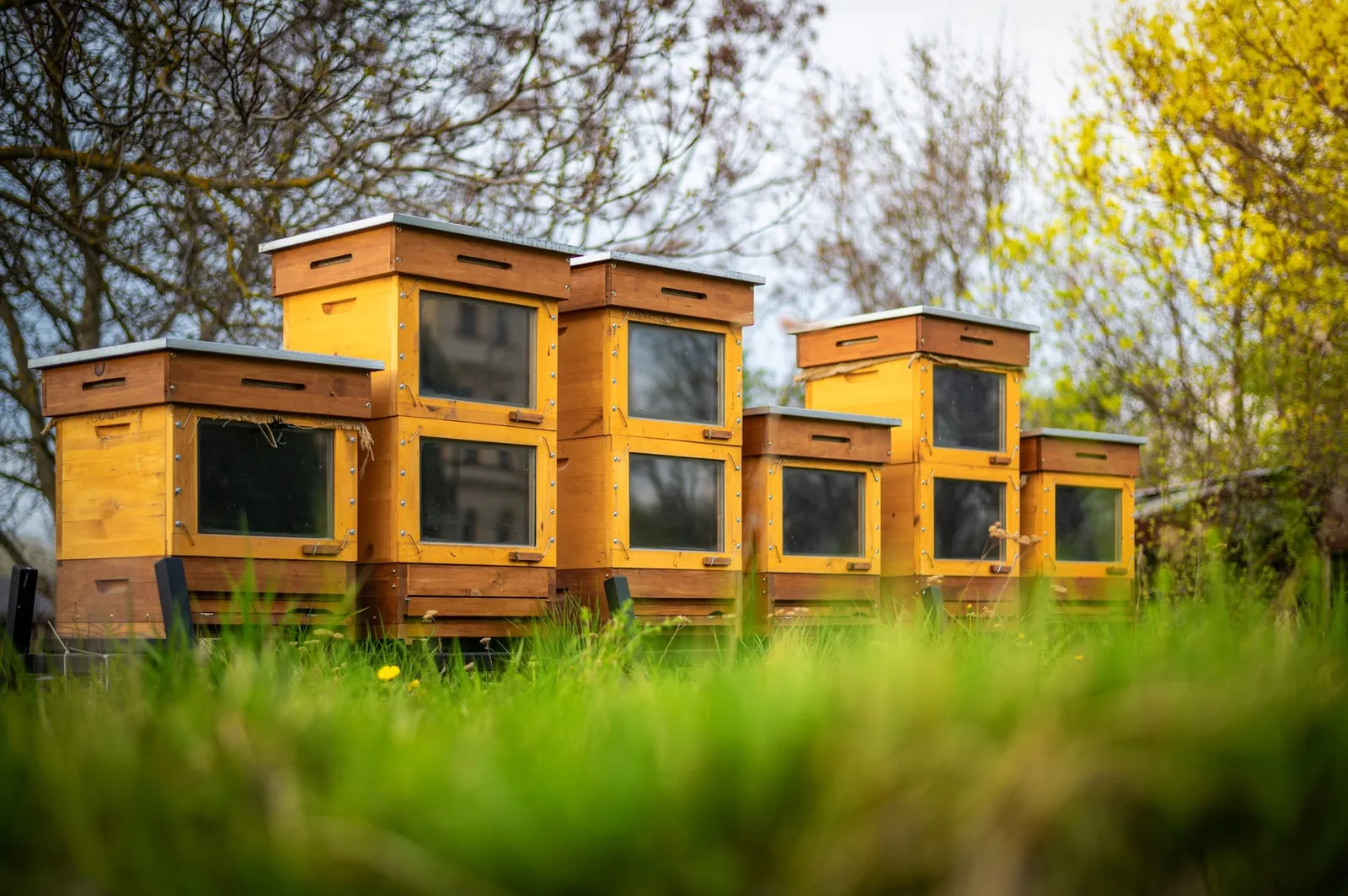
In 2020, the Thermosolar Hive team from Olomouc won the Czech regional final of the EIT Food Innovation Prizes and took 3rd place in the Grand Final. Their hive uses the energy of the sun to eliminate the Varroa mite without chemicals, resulting in stronger colonies and residue-free honey. Today it is used across Europe and is entering Australia. We asked Jan Rája, co-owner of Apis Innovation, what has happened since.
Since participating in EIT Food in 2020, what have been the biggest milestones and breakthroughs for Thermosolar Hive?
A lot has happened since 2020. The EIT Food Innovation Prizes came at exactly the right moment for us – we won the Czech regional final and then took 3rd place in the Grand Final, which brought us €10,000 and, even more importantly, credibility. Since then, we have closed a successful investment round, which allowed us to keep developing the hive and grow production. We improved our therapy hive based on feedback from beekeepers and added new products to the range. We started working on automation, electronic control of heating, so that the treatment no longer depends only on a sunny day. We went international in a much more systematic way: beekeeping trade fairs abroad, distribution partners, and this year we spent three weeks in Australia opening the market together with our partner Australian Bee Supplies. We started research cooperation with universities, today mainly with the College of Technology and Economics in České Budějovice (VŠTE). And we built a second pillar of our work – the project Včely do firem (Bees for Business), where we place and manage Thermosolar Hives at company premises.
How has the Thermosolar Hive technology and design evolved from the early versions to what beekeepers use today?
The principle has stayed the same from the very beginning: we use the energy of the sun to heat the brood nest to a temperature that the bees and brood survive, but the Varroa mites hidden in the capped brood do not. Mites begin to suffer damage above 38 °C and above 40 °C they are eliminated completely, so we never need any of problematic chemicals that are widely used today against the mites.
The first versions came from the invention of Dr. Roman Linhart and were tested at Palacký University in Olomouc and by many practising beekeepers. Today’s hive is a complete system: a thermosolar ceiling and thermosolar boxes, a vapour-permeable roof, the Varroapad and integrated digital thermometers with upper and lower sensors in the brood frames. The beekeeper can follow the whole treatment, the brood nest is heated slowly, about 0.1 °C per minute, up to 47 °C, and then it stays at over 40 °C for at least 120 minutes. The queen and adult bees can move down to the cooler boxes in the meantime.
Over the years we made the hive more practical for everyday beekeeping – easier handling, better materials and a better fit to the way beekeepers really work.
You’ve expanded beyond the Czech market into the wider EU, international events and now you will try to conquer Australia. What has going international taught you about global apiculture needs?
The most important lesson is that Varroa is truly a global problem. Even Australia, the last inhabited continent without it, has had Varroa since 2022 and in 2023 it had to move from eradication to long-term management. So Australian beekeepers are now facing what Europe has lived with for decades – and they are very open to solutions without chemicals from the start.
Chemical treatment is also problematic due to resistance of the mites, because of residues in wax and honey, and because customers want clean honey. That is the same in the Czech Republic, in Germany, in the USA or in Australia.
At the same time, the details differ a lot: climate and the amount of sunshine, hive standards and frame sizes, regulations and also the way beekeepers buy equipment. You cannot just export a product, you need a good local partner, demonstrations in real apiaries and patience. And of course we learned a lot about logistics, shipping hives to the other side of the world is a discipline of its own, specifically regarding the strict conditions for importing wood products into Australia.
With years of field data now available, what are long-term users reporting regarding Varroa mite reduction, colony winter survival, and honey yield?
When the treatment temperature is reached, the elimination of mites in the capped brood is practically 100%. One treatment removes up to about 80% of mites in the colony, and a second treatment within 6–14 days takes care of the survivors. Because there are no chemicals, the honey is free of residues.
Colonies treated this way are also stronger. Our users report on average about 40% higher honey yield thanks to significantly faster spring development, lower consumption of winter stores (about 6.4 kg less per colony on average) and suppression of Nosema disease.
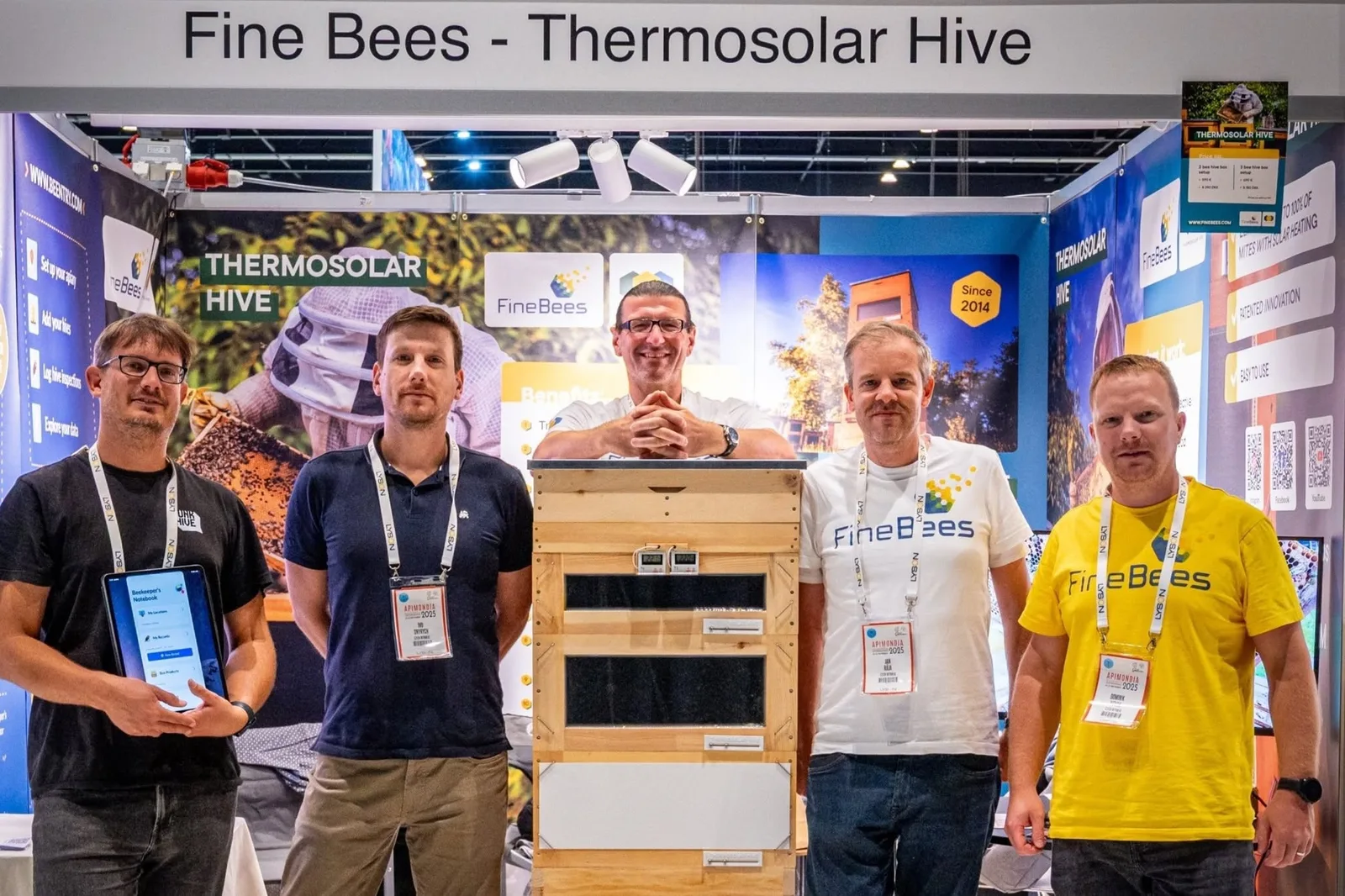
Looking back at 2020, how did early recognition and support from the EIT Food network act as a stepping stone for your growth?
For us it was a very important stepping stone. We are a small company from Olomouc with a hardware product for beekeepers, and suddenly we were standing among the best agrifood startups from 17 countries, and we won the Czech regional final and 3rd place in the Grand Final. That gave us confidence that what we do matters not only to beekeepers, but to the whole food system.
The prize money helped development, but the bigger value was elsewhere: credibility with investors and partners, which also helped us in the next investment round, the experience with pitching to an international jury, and new contacts. EIT Food also helped us to tell our story differently – not only as “a hive against Varroa”, but as a way to produce residue-free honey and to protect pollinators, which are essential for food production.
What other projects are you working on?
Besides the Thermosolar Hive itself, there are three main things:
Včely do firem (Bees for Business) – we place Thermosolar Hives at companies and take full care of them. The company gets its own residue-free honey, data for ESG and CSRD reporting, support for building certifications like BREEAM or LEED, and a strong story for employees and customers. We also offer options for remote hive monitoring, bee-themed events such as honey extraction sessions for employees or business partners and a wide range of other possibilities. Our team includes not only experienced beekeepers but also scientists who research bees and are great at making science accessible to the public.
“Nahlaš sršeň” (Report a Hornet) – a citizen-science application for early detection of the invasive Asian hornet, which is a new significant threat for bees in Europe. Thanks to this app, several Asian hornets and their nests have already been reported, thereby helping to prevent the spread of the Asian hornet in the Czech Republic.
We are closely cooperating with Včelín association – a non-profit association supporting pollinators in the landscape. It holds the status of a workplace for people with disabilities and employs people from disadvantaged groups in beekeeping from peripheral rural areas of the Czech Republic, where there is a lack of job opportunities for these individuals, and what's more, it helps them psychologically, because beekeeping also has a therapeutic effect.
What are the next major goals, technological developments, or new markets for Thermosolar Hive or other projects in the coming years?
Technologically, the main goal is automation – electronically controlled heating and smart monitoring of the colony, so that thermotherapy works in any weather and the beekeeper gets the data directly on their phone.
On markets, our priority is to grow in Australia, where Varroa is now spreading and beekeepers need effective solutions without chemicals and also to strengthen our presence in Europe.
With Včely do firem we want to expand to more Czech cities. And the long-term vision stays the same: that chemical-free beekeeping becomes the normal standard, not an exception.
About Apis Innovation
Apis Innovation s.r.o. (Olomouc, Czech Republic) develops the Thermosolar Hive, a beehive that uses solar energy to eliminate the Varroa mite without chemicals, resulting in stronger colonies and residue-free honey. Winner of the EIT Food Innovation Prizes 2020 Czech regional final and 3rd place in the Grand Final. Through the project Včely do firem, the company brings bees and biodiversity to company premises.
www.thermosolarhive.com | www.vcelydofirem.cz
DEX Innovation Centre is EIT Food Country Representative Czechia for 2026–2028, connecting Czech agrifood innovators, startups and researchers with EIT Food opportunities across Europe.